
SBA 7a Loans for childcare facilities, daycare centers, preschools, charter schools, or educational service businesses

Childcare concept

By: Tricia Hoffman, Senior Vice President – Business Development Officer at Gulf Coast Small Business Lending

The childcare industry is experiencing significant growth, presenting a valuable opportunity for entrepreneurs. For those looking to start, expand, or acquire a daycare (or a similar, related business), securing the right financing is a critical first step. An SBA 7(a) loan can be an excellent tool to help you achieve your business goals.

Whether you are an independent or franchise operator, an SBA 7(a) loan is an excellent option to expand, acquire, update, or start-up your business.

This guide will explain how an SBA 7(a) loan can be used for your daycare business, from construction and acquisition to refinancing. We will also cover the eligibility requirements and benefits, providing a clear path forward for aspiring and current daycare owners.

Why an SBA 7(a) Loan is a Great Fit for Daycares

The SBA 7(a) loan is the U.S. Small Business Administration’s flagship lending program, designed to help small business owners access capital. It’s known for its versatility, offering funds for a wide range of business needs with favorable terms. Loans are available up to $5 million, with repayment periods of up to 25 years for real estate and 7-10 years for working capital, equipment, closing costs, and other uses of loan proceeds.

For childcare, daycare, preschool, or educational service business owners, the SBA 7(a) program is particularly beneficial. Unlike most conventional loans, the SBA 7(a) loan program allows for the financing of goodwill and other intangible assets, which is often a major component when purchasing an existing business. This flexibility makes it an ideal choice for the unique needs of the childcare industry.

How to Use an SBA 7(a) Loan for Your Daycare

The funds from an SBA 7(a) loan can be applied to nearly any legitimate business expense. Here are some of the most common ways daycare owners use this financing:

Purchasing an Existing Daycare

Acquiring an established daycare is a popular use of the SBA 7(a) loan. The loan can cover the purchase price of the business, including its real estate, equipment, and goodwill. This allows you to step into a turnkey operation with an existing client base and revenue stream.

Note that Gulf Coast Small Business Lending places no limit on the amount of goodwill we will finance with an SBA 7(a) loan when the buyer of an existing business has good personal credit and relevant industry experience coupled with excellent business cash flow.

New Construction

If you plan to build a daycare from the ground up, an SBA 7(a) loan can finance the entire project. This includes the cost of land, construction, and all the necessary furnishings and equipment—from playground structures and educational materials to security systems and kitchen appliances. A unique feature of an SBA 7(a) construction loan is that it is structured as “construction to permanent” so that you only need to apply for one loan which will cover the construction process and once completed, will “term out” into a long term loan without the need to secure a new, permanent loan.  One loan with one closing covers the entire project!

Refinancing Existing Business Debt

Are you currently operating a childcare business that has business debt with unfavorable terms? Perhaps the loan amortization term is very short, resulting in large monthly payments.  Or there might be a balloon payment coming due very soon.  If this is your situation, you may be able to refinance the loan with an SBA 7(a) loan. There are several steps to determine if your current debt meets the eligibility requirements.  We would be happy to discuss these details with you in a short phone call.  Typically, your loan must be current (meaning not past due) and you must be able to demonstrate that refinancing with an SBA 7(a) loan will benefit the business.  Our team of professionals has years of experience and can quickly help you to assess if you meet the requirements to consider a refinance.

Expanding or Renovating Your Facility

If your daycare is growing, you might need more space or updated facilities. An SBA 7(a) loan can provide the capital needed for renovations, expansions, or purchasing new equipment to accommodate more children in your facility or broaden the services you are able to offer.

Understanding the Eligibility Requirements

To qualify for an SBA 7(a) loan, your business must meet certain criteria set by the Small Business Administration (SBA). Key requirements include:

  • For-Profit Business: Your daycare must operate as a for-profit entity.
  • U.S. Operations: The business must be located and operate within the United States or its territories.
  • Owner Equity: You must have some of your own capital invested in the business. The total amount depends on the project specifics, but you should typically anticipate at least 10%.
  • U.S. citizen: Your business must be owned by U.S. citizens or lawful permanent residents residing within the United States.

Upon application, we will also evaluate your personal credit history, business plan, cash flow projections, and industry experience to determine your eligibility. If your business is eligible, we will review your unique situation and needs as we work to structure a loan that is tailored to your specific needs. 

Note: This is not a commitment to lend. Loans are subject to credit and collateral approval. Additional terms, restrictions and limitations may apply.

Taking the Next Step with Gulf Coast Small Business Lending

Navigating the SBA loan process can feel complex, but you don’t have to do it alone. With a strong business plan and the right guidance, an SBA 7(a) loan can provide the foundation for a thriving daycare business.

At Gulf Coast Small Business Lending, we specialize in helping entrepreneurs like you access the capital they need to succeed. Our team is dedicated to simplifying the lending process and finding a solution tailored to your specific goals. Visit our SBA Loans section of our website to learn more about our options and how we can help you make your dream a reality. When you are ready to discuss specific details, or if you have questions, you can find a listing of our experienced professionals here: Our People.


About Tricia Hoffman

Tricia Hoffman has been actively involved in SBA lending for over 20 years serving as both a Business Development Officer and Portfolio Manager during her career. Tricia graduated with a degree in Economics and Accounting from the University of Tampa. After graduation, Tricia worked as a commercial real estate loan officer, special assets manager, and private banker in the Tampa Bay area. In 1998 she joined with national SBA lender and began working with small business clients throughout the U.S. Since 1998 Tricia has provided financing for hundreds of borrowers across many industries. When not originating SBA loans you can often find Tricia on the golf course, on the beach, or out for a hike.


Products and services offered by Gulf Coast Small Business Lending, a division of Gulf Coast Bank & Trust Co. Nothing herein shall be construed as a commitment to lend. All loans are subject to credit and collateral approval. Additional terms, restrictions and limitations may apply. Loans are only available to U.S. citizens and residents. Member FDIC – Equal Housing Lender.


Using SBA Loans to Buy a Business

Piggy Bank as a Safe

Unlocking SBA Loans to Buy a Business (also known as Business Acquisition)

By: Jim Frey, Senior Vice President – Business Development Officer at Gulf Coast Small Business Lending 

Are you eyeing that dream business acquisition? Perhaps you’ve found the perfect venture, but how do you know where to start?  We know it can be confusing to sort out the financial requirements but fear not, we are here to help you navigate the process. This article will provide some useful information if you are considering utilizing an SBA loan to finance your business acquisition.  For the purposes of this article, an “SBA loan” refers to a loan provided using the SBA 7(a) loan program.

First, let’s consider the flexibility (and beyond) of an SBA loan: An SBA loan isn’t your run-of-the-mill loan. It’s a chameleon, adapting to your unique needs. Whether it’s an SBA loan for a startup or financing a business acquisition, the SBA loan structure can support a wide range of scenarios. Picture this: you’re eyeing a business without real estate or substantial assets—just the intangible magic of goodwill. The SBA loan nods approvingly. It’s your flexible companion, ready to make that deal happen.

Next, use an SBA loan to solve the collateral conundrum: Conventional loans require collateral, and plenty of it — real estate, liquid assets, etc. But what if your target business lacks such assets? That’s where the SBA steps in. SBA loans are guaranteed in part by the U.S. Federal Government and that guarantee acts like a superhero cape, shielding banks from collateral anxiety. Suddenly, business acquisitions with minimal collateral become feasible.

Another benefit of SBA loans is what I call “the 10% magic”: Brace yourself for the equity injection (a/k/a cash down payment) twist. While conventional loans raise an eyebrow at anything less than a hefty down payment (often 20%-25%), an SBA loan doesn’t even twitch at a considerably smaller equity injection. In fact, a mere 10% from the buyer is often completely acceptable! And here’s the plot twist: that 10% can be a combo deal — 5% from the buyer’s pocket and 5% from a generous seller in the form of a seller note. Imagine the possibilities of an SBA loan!

But wait, there’s more!  Let’s talk about time travel: loan edition: Buckle up; we’re time-traveling. Conventional loans offer a brief ride — typically terms of only 5 to 7 years. But an SBA loan? It’s the DeLorean of loans, whisking you to a 10-year business acquisition journey. And if you’re eyeing owner-occupied commercial real estate, strap in for a 25-year odyssey. Longer terms mean lower monthly payments and happier cash flow.

Next, we need to cover the “no strings attached” feature of SBA loans: Forget about loan covenants breathing down your neck. An SBA loan is the cool teacher who says, “Express yourself!” No restrictive clauses, just business freedom.

Lastly, I’d be remiss if I didn’t mention fees and valuations as part of an SBA loan: Every adventure has its costs. An SBA loan includes a guaranty fee (up to 3.75%), but fear not – this in place of the points that most borrowers are accustomed to paying.  And sometimes the SBA waves its wand and reduces fees.  You should always ask if any of these specific fee reduction offers is currently being offered or even contemplated.  When your timeline is flexible, sometimes it can save you thousands of dollars if a new fee reduction offer is about to take effect! With respect to required third-party business valuations (which cost around $2,500), they’ll assess the value of the business you are planning to purchase.  While $2,500 may seem pricey, it is well worth the money to confirm that the value is there before you proceed with closing on an SBA loan!

Now that you understand some of the key benefits of an SBA loan, I’d like to share a couple of helpful hints as you prepare to embark on the SBA loan process to buy a business.

1. Two examples that demonstrate ways to improve your personal liquidity:

Example 1 – A business owner in his 20’s was running his company for two years and doing well. An opportunity came up for him to buy another business in that same niche that would drastically increase revenues and profit and allow for some economies of scale. He had some personal liquidity (think cash reserves) but not enough to make the deal happen. An uncle stepped in and invested sufficient capital and was given 10% ownership in the firm. While it can vary, the uncle’s ownership was passive and didn’t involve any decision making or voting status but provided the owner with the resources to proceed with the acquisition deal.

Example 2 – A married couple was going to acquire an existing business in the wedding niche. They had great experience, but they didn’t have enough personal funds to for the equity injection (cash downpayment) required to secure an SBA loan. Their parents and a sibling provided gifts of funds, allowing the buyers to complete the deal. Typically, the SBA lender will require a simple gift letter stating that the funds provided are not a loan but instead a gift (the difference being that gifts do not require repayment!), the total amount of the gift, and any other relevant details.

2. Relationship with the seller: personal liquidity:

Picture a seasoned business owner, ready to pass the torch and ease into retirement. With an SBA loan, they can gracefully exit the business by selling 100% of their business ownership. But wait, there’s a great option you should consider that smooths out the process for everyone! Consider arranging for the seller to moonlight as an independent consultant, guiding the new owner(s) through the labyrinth of business intricacies. For up to 12 months, they share wisdom, train successors, and weave a web of relationships that spans generations.

In another option, our eager buyer steps forward, eyes fixed on a slice of the business pie. They can acquire a portion, leaving the seller in place with as little as 1% ownership. This can provide an easier, seamless transition and relationships with clients and vendors remain unbroken.

How to qualify for an SBA loan to purchase a business

All of this is well and good and now you are on board – an SBA loan is the way to go!  The next most common question I get is “what does it take to qualify?”  Aside from the details I’ve already provided here are a few more requirements to take into account:

  • The business you are acquiring must be a for-profit business;
  • The business must be operating within U.S. borders or its territories; 
  • The industry must also be eligible (most are, a few aren’t, it is easier to ask me than it is to take up a page or two with lists);
  • The business buyer generally needs to have a personal credit score of 680 or higher;
  • Lastly, at least 51% of the business must be owned by a U.S. Citizen or a Green Card holder.

Of course, this is a bit of an oversimplification, but these are the key requirements.  I always encourage prospective borrowers to reach out to me early in the process so I can review all of the details of their unique situation and confirm that an SBA loan is the best option.  In addition, many other frequently asked questions are addressed on our website here: https://gulfcoastsba.com/faqs/.

In summary, an SBA loan isn’t just a loan; it can be your golden ticket to business ownership. By leveraging various SBA loan programs, borrowers can access flexible financing options, lower down payment requirements, and longer repayment terms that make acquiring a business far more attainable. So, grab your briefcase, channel your inner entrepreneur, and give me a call. Together we can work on putting together an SBA loan that paves your path to success!

If you have any other questions, I am always happy to talk with prospective borrowers.  In addition, you can find additional information about many of the industries and loan purposes offered by Gulf Coast Small Business Lending by visiting the SBA Loans section of our website.


About Jim Frey

Jim Frey has over 21 years of financial services experience, including an exclusive focus on SBA lending since 2012. Jim enjoys working with many referral sources across the US and he takes particular satisfaction in helping business owners reach their goals through SBA financing. Over the years, Jim has developed a specific expertise in structuring SBA loans for business acquisitions, franchise lending, expansions and construction. Jim has a Master of Business Administration from the University of Pittsburgh’s Katz Graduate School of Business and a B.S. in Finance from St. Vincent College. When not working on deals, Jim’s hobbies include hiking, volunteering, golfing, and traveling with his wife and two daughters.


Products and services offered by Gulf Coast Small Business Lending, a division of Gulf Coast Bank & Trust Co. Nothing herein shall be construed as a commitment to lend. All loans are subject to credit and collateral approval. Additional terms, restrictions and limitations may apply. Loans are only available to U.S. citizens and residents. Member FDIC – Equal Housing Lender.
Using an SBA Loan for a Partner Buy Out

Blue toned, lined up 3D extrusions of $ signs. One $ is falling out of line.

Consider an SBA Loan when you are ready to buy out your partner


By: Jim Frey, Senior Vice President – Business Development Officer at Gulf Coast Small Business Lending 

The Small Business Administration’s 7(a) loan program, commonly known as the SBA 7(a) program, is a versatile financial tool that can be used for various purposes, including partner buyouts. A partner buyout occurs when one or more existing owners acquire the entire interest of another owner, leading to a change in the business’s ownership structure. This article will provide some useful information if you are considering utilizing an SBA loan to finance a partner buyout.

To start, the requirements for an SBA loan to buy out a partner stipulate that the business must have a debt-to-net-worth ratio of 9:1 or less. If the ratio is larger than this, the borrower will need to put 10% down to qualify for the loan.  If you need assistance determining your business’s debt-to-net-worth ratio, please speak with your SBA lender or your accountant/CPA.

As an example, let’s consider a business with assets valued at $6,000,000, debt/liabilities of $3,100,000, and equity of $3,920,000. The debt-to-net worth ratio in this scenario is 0.79, which is below the threshold of 9:1, eliminating the need for an equity injection (also known as “down payment”, using personal cash reserves).

One of the many advantages of using an SBA loan for a partner buyout is the long-term repayment schedule that is available.  Loan payments are calculated based on a 10-year fully amortizing loan repayment term which typically results in a manageable monthly loan payment.  This 10-year loan term distinguishes SBA loans from traditional commercial loans which typically offer only five- to seven-year terms. 

Another advantage of using an SBA loan for a partner buyout is that they are available with no collateral requirements in amounts of up to $5 million.

To help illustrate the use of an SBA loan in a partner buyout, let’s consider a scenario where one partner wishes to purchase another’s stake.  Regardless of whether the contemplated transaction is a full or partial buyout, an SBA loan makes this feasible.

Let’s review the details and typical terms:

partial change of ownership involves the sale of a portion, but not all, of a selling owner’s interest. In contrast to complete buyouts, only the remaining owners who hold 20% or more of the business (based on ownership post-sale) are required to personally guaranty the loan.

complete partner buyout occurs when one or more existing owners acquire the entire interest of another owner, resulting in 100% ownership for the remaining owner(s). In this scenario, the acquiring owner(s) and the business entity act as co-borrowers. Typically, in an SBA loan, only owners with a 20% or more ownership stake are required to personally guaranty the loan, but in a complete partner buyout, all remaining owners, irrespective of their ownership percentage, must jointly and severally guaranty the loan. 

A borrower can be eligible for an SBA loan without the need for an equity injection (also known as “down payment”, using personal cash reserves), provided that two conditions are met:

  1. The business’s debt-to-net-worth ratio is at or below 9:1 at the end of the year and the most recent period, and
  2. The purchasing partner has been actively involved and has maintained the same or a higher ownership percentage for over two years.

In the event of a full 100% buyout, a short-term consulting agreement can be set up, allowing the seller(s) to provide support and assistance for a period not exceeding 12 months.  Often this helps ease the transition to the new owners and helps the seller ease into retirement or their next venture.  As you can imagine, a buyout with complete change of ownership has the potential to be disruptive for employees, vendors, and customers.  Keeping the seller(s) involved for several months, even if only on a limited basis, can help smooth things out for all involved.

Another matter to consider in a partner buyout is the need for a business valuation.  In my experience, determining a fair value for the share(s) can sometimes lead to disagreements between the buying and selling partners. To address this, the SBA mandates an independent third-party valuation of the business.  This third-party valuation provides valuable data and information that both buyer(s) and seller(s) will need as they negotiate and finalize their buyout.

There are some other key points and features that you’ll want to know about if you use an SBA loan for your partner buyout:

  • The maximum term for partner buyout loans is 10 years, fully amortizing;
  • Prior to May 2023, borrowers were required to acquire all of a business (100%), there was no option for a partial buyout. This was often an obstacle for many borrowers and prevented many from proceeding with an SBA loan.  To address this situation, the SBA listened to lenders and borrowers and ultimately relaxed the rules, allowing existing business owners to buyout the equity interests of other partners, either completely or partially;
  • It is important that you work with an experienced SBA lender as you will want someone to guide you through the process who is up to date on all of the current SBA requirements.  In addition, it is helpful if your SBA lender is a designated SBA Preferred Lender.  For more information about choosing the right SBA lender for your project, I recommend you check out this detailed article on our website: How to Choose the Right SBA Lender for Your Project (A few things to consider when selecting which SBA lender is best for you).

I often find it helpful to share real-life examples so let’s look at one involving a home health care business with two partners who each owned 50%. One partner, in his late sixties, wished to retire, while the other partner, in her early fifties, wanted to continue working and running the business. After negotiating the price, the younger partner secured an SBA loan to buyout the other partner. The debt-to-equity ratio was acceptable, and the cash flow was robust. A third-party business valuation confirmed the accuracy of the purchase price. The SBA loan facilitated 100% financing, enabling the older partner to retire. The remaining partner now owns the entire business!

If you have any other questions, I am always happy to talk with prospective borrowers.  In addition, you can find additional information about many of the industries and loan purposes offered by Gulf Coast Small Business Lending by visiting the SBA Loans section of our website.


About Jim Frey

Jim Frey has over 21 years of financial services experience, including an exclusive focus on SBA lending since 2012. Jim enjoys working with many referral sources across the US and he takes particular satisfaction in helping business owners reach their goals through SBA financing. Over the years, Jim has developed a specific expertise in structuring SBA loans for business acquisitions, franchise lending, expansions and construction. Jim has a Master of Business Administration from the University of Pittsburgh’s Katz Graduate School of Business and a B.S. in Finance from St. Vincent College. When not working on deals, Jim’s hobbies include hiking, volunteering, golfing, and traveling with his wife and two daughters.


Products and services offered by Gulf Coast Small Business Lending, a division of Gulf Coast Bank & Trust Co. Nothing herein shall be construed as a commitment to lend. All loans are subject to credit and collateral approval. Additional terms, restrictions and limitations may apply. Loans are only available to U.S. citizens and residents. Member FDIC – Equal Housing Lender.

SBA Loans for Start-up Franchises

Start-Up Franchise

By: Jim Frey, Senior Vice President – Business Development Officer at Gulf Coast Small Business Lending

Using an SBA loan to start-up a franchise location

For many aspiring entrepreneurs, a start-up franchise is an excellent option for launching their dreams of small business ownership. Starting a franchise offers significant advantages over an independent business, especially for first-time entrepreneurs. With a franchise, you’re not starting from scratch—instead, you’re buying into a proven business model with established branding, tested systems, vendor relationships, and often national marketing support. Some refer to those benefits collectively as “enterprise value”. Franchises can help you get up and running more quickly because they provide an existing system and platform; which typically includes such items as menus, pricing, software, and/or layout, and support with training on operations and customer service. As you can imagine, this dramatically reduces the learning curve and the risk of costly trial-and-error mistakes that can sink independent start-ups in their first year.

Additional benefits of using an SBA loan to start-up a franchise location

Franchises also can provide immediate credibility with customers and lenders. Banks are generally more comfortable financing franchises—especially SBA lenders—because they can evaluate past performance across multiple locations, and all parties can research and better understand franchises through standardized and comprehensive Franchise Disclosure Documents (FDDs). Compared to a brand-new independent concept with no market history, a franchise gives you a head start. In short, while you may pay fees for the franchise rights, you’re also buying a blueprint that’s often more likely to succeed.

Getting started with the SBA loan process

There are a number of ways to finance this type of start-up. An entrepreneur can use cash, savings, home equity line, personal loans, and take a loan against, or withdraw funds from retirement (sometimes using a combination of more than one of these options). Often when someone uses retirement funds, there is a penalty or even tax implications, so some might want to consider a Rollover as Business Start-ups, a/k/a “ROBS”, which allows individuals to use their retirement savings to fund a new business without incurring taxes or penalties.

Qualification for and typical terms of an SBA loan for franchise start-up deals

The SBA 7(a) program is a great option because it provides a 10-year loan, with no prepayment penalty, and a borrower can get up to 90% financing. This provides for a longer amortization and a single loan that can roll real estate, construction, soft costs, and working capital into one package. These SBA loans are partially guaranteed by the U.S. Small Business Administration and issued by participating lenders and banks such as Gulf Coast Small Business Lending. To qualify for an SBA loan the borrower will need to meet specific lending criteria and the franchise must also be included in the SBA Franchise Directory. If you are interested in the option, you should reach out to our team of experienced SBA professionals (https://gulfcoastsba.com/our-people/) to discuss the details and get guidance on franchise finance, loan structuring, and eligibility requirements.

Often start-up franchises are going to require around 20% equity injection (think of this as a cash down payment) from the borrower, and the bank will provide an SBA loan covering approximately 80% of the total project costs. Note that the maximum SBA 7(a) loan is $5,000,000.

Items you will need in order to apply for an SBA loan

To consider the SBA loan, lenders will ask for many documents, including a business plan with 24-month projections and break-even analysis, a personal financial statement, three years of tax returns, a resume from an experienced operating partner, and also a letter of intent or lease, build-out budget, equipment quotes, and a working-capital schedule.  Note that often the franchisor can help with a model for pro formas which might speed up underwriting because seasoned franchise lenders already have a level of comfort with the assumptions.

When it comes to projections we recommend taking a middle-of-the-road approach.  Sometimes a borrower will try to find the worst-case scenario and provide that set of projections to the SBA lender while other borrowers provide lenders with overly aggressive projections. Quite frankly, neither works well. Lenders much prefer realistic or moderate projections that can be supported with well documented and well considered assumptions.

Finding the right SBA lender for your franchise start-up project

While not all banks are comfortable with start-up franchise loans, many have a niche specialization with franchise lending.  Borrowers should always confirm that their lender of choice is both an SBA Preferred Lender and that they have recently financed other franchise start-ups, preferably with the chosen brand. A great question to ask would be “How many units of this brand did you finance last year?” Many banks get comfortable with a franchise brand and the process becomes streamlined, and much of the underwriting is standardized, making a faster process. SBA lenders that specialize in this type of lending also roll interest-only payments through construction so you are not servicing debt before opening, and many times they can coordinate with the franchisor’s field team when delays pop up.

The loan process and information to collect before applying for an SBA loan for your franchise start-up

Some of the biggest challenges in securing SBA financing for a franchise start-up include a poor credit score (typically under 680), too little equity/liquidity, construction/building permit delays, finding a good location that suits both the borrower and franchisor, and getting accurate projections. 

In summary, the following steps are a roadmap for an SBA 7(a) loan for a start-up franchise:

  1. Verify the franchise is on the SBA Franchise Directory, review the FDD;
  2. Draft a business plan, projections, collect the documents required by the SBA, talk with an SBA lender;
  3. The lender will review the project with you, and if it is a fit, they will underwrite the loan, write a credit memo, and ideally get the loan request approved;
  4. The borrower finalizes the construction budget and plans, finalizes the lease, and gets the building permits;
  5. The initial loan funding occurs, there is a construction draw period over months (interest only), then once construction is completed, there is a final inspection and final funding;
  6. Grand opening, business moves full speed ahead, the SBA loan switches to fully amortizing payments.

Summary

Starting a franchise can be a smarter and less risky path to business ownership than launching an independent start-up, especially for first-time entrepreneurs. Franchises offer proven business models, brand recognition, established systems, and lender credibility—factors that reduce the learning curve and increase chances of success. There are many financing options. Choosing a lender experienced with start-up franchises—ideally familiar with the chosen brand—can streamline the process and avoid delays. Challenges may include low credit, limited equity, and construction setbacks, but with the right preparation and team, start-up franchise owners can launch with confidence and momentum.

Gulf Coast Small Business Lending has an experienced and dedicated team, Gulf Coast Franchise Finance, which specializes in franchise lending nationwide.  You can find more information here: www.gulfcoastfranchisefinance.com or you can reach out to our experienced SBA professionals here: https://gulfcoastsba.com/our-people/.  Gulf Coast Small Business Lending is a nationwide SBA Preferred Lender.


About Jim Frey

Jim Frey has over 21 years of financial services experience, including an exclusive focus on SBA lending since 2012. Jim enjoys working with many referral sources across the US and he takes particular satisfaction in helping business owners reach their goals through SBA financing. Over the years, Jim has developed a specific expertise in structuring SBA loans for business acquisitions, franchise lending, expansions and construction. Jim has a Master of Business Administration from the University of Pittsburgh’s Katz Graduate School of Business and a B.S. in Finance from St. Vincent College. When not working on deals, Jim’s hobbies include hiking, volunteering, golfing, and traveling with his wife and two daughters.

SBA 7a Loans for Restaurants

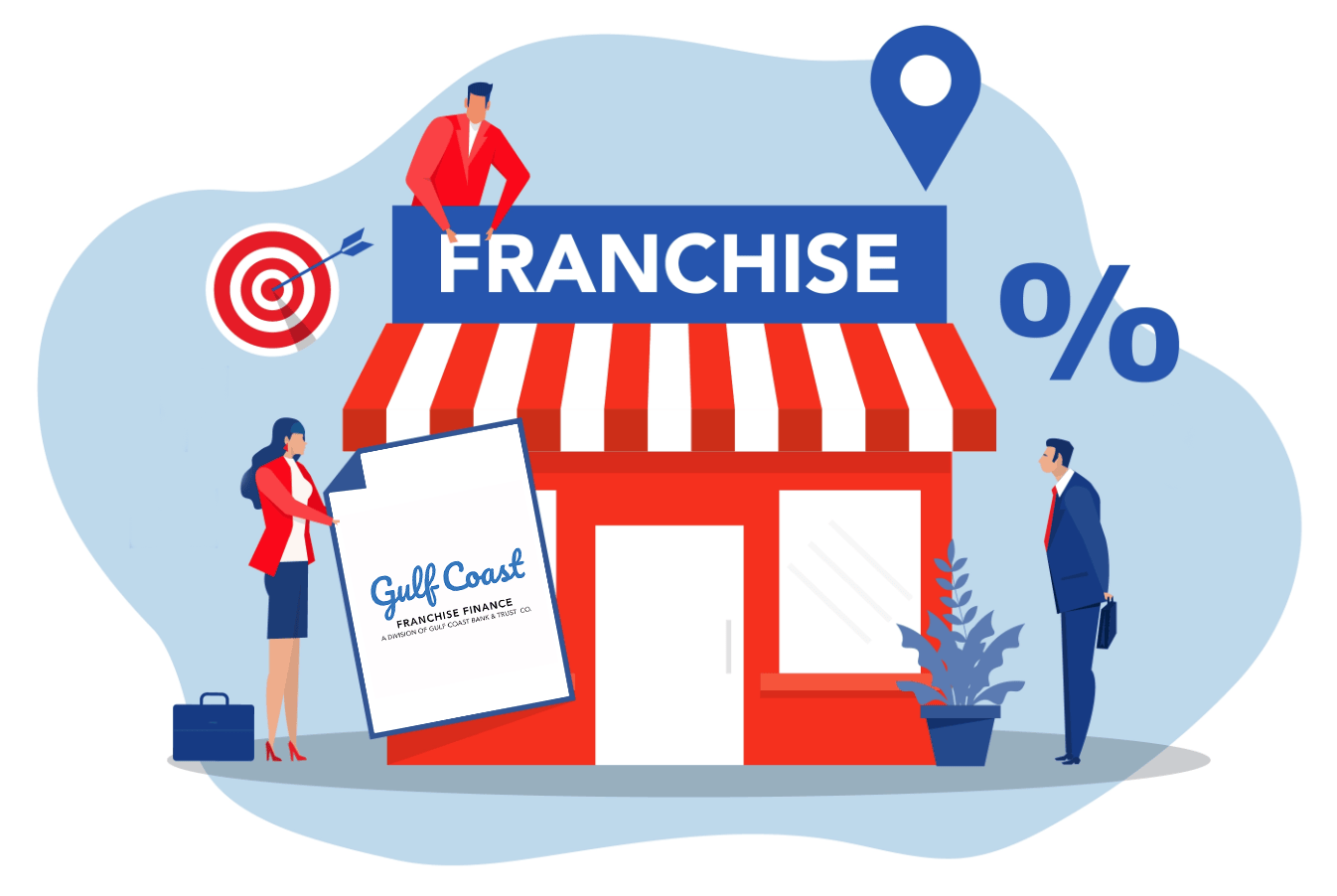
Clipboard with Franchise brochure

By: Mike Pierson, Executive Vice President – National Sales Manager at Gulf Coast Small Business Lending 

Opening, acquiring, or expanding a restaurant is an exciting venture.  You will find that the process is less challenging if you work with an experienced lender that understands the restaurant industry.  Traditional banks often view restaurants as high risk, which can make loan approvals difficult. However, SBA 7(a) loans (and lenders that specialize in SBA lending) typically offer restaurant owners a viable path to the capital they need to be successful.

This guide explores how SBA 7(a) loans can help you start, buy, or grow/expand your restaurant business. We’ll cover eligibility requirements, basic loan terms, and practical uses for these funds.

Why Traditional Financing Falls Short for Restaurants

The restaurant industry faces unique challenges that make conventional lenders hesitant. High failure rates, thin profit margins, and unpredictable cash flow all contribute to this reluctance. For this reason, banks often require full collateral, significant down payments, and a proven track record before approving restaurant loans.  In addition, many conventional loans come with shorter term amortizations and, in turn, higher monthly loan payments.

SBA 7(a) loans bridge this gap. The Small Business Administration (SBA) guarantees a portion of these loans, reducing lender risk and making approval more accessible for qualified restauranteurs.

What Makes SBA 7(a) Loans Different

SBA 7(a) loans stand out for their versatility and favorable terms. Unlike specialized financing options that limit the use of funds, these loans offer flexibility across multiple business needs.

The SBA guarantees approximately 75% of the loan amount (this can vary based on several factors but most fall within the 75% guarantee range).  While the lender cannot consider the guarantee as collateral, it effectively encourages SBA lenders to take additional risk and thereby consider loans to restaurants when conventional financing falls short.

How You Can Use SBA 7(a) Loan Funds

  1. Equipment Purchases

Modern restaurant equipment represents a significant investment. SBA 7(a) loans cover both major purchases like commercial ovens, walk-in freezers, and industrial ranges, plus smaller recurring expenses such as cookware and serving supplies.

Upgrading your kitchen equipment improves efficiency and food quality. New appliances often reduce energy costs while increasing productivity during peak service hours.

  1. Real Estate and Construction

Whether you’re leasing space, purchasing a building, or constructing a new location, SBA 7(a) loans provide financing for your restaurant’s physical presence. Owning your location builds equity while protecting against rent increases while SBA loans are also available to help with tenant build out for those who are leasing space.

These funds also support restaurant expansion. Opening additional locations or renovating existing spaces becomes more achievable with long-term, affordable financing.

  1. Capital Improvements and Repairs

Maintaining your restaurant requires ongoing investment. Point-of-sale system upgrades, HVAC repairs, and kitchen renovations all qualify for SBA 7(a) funding.

Regular improvements keep your establishment competitive and appealing to customers. Updated technology streamlines operations while enhancing the dining experience.

  1. Debt Refinancing

If your existing debt carries high interest rates or unfavorable terms, an SBA 7(a) loan can help you refinance. Consolidating multiple loans into one payment with a lower rate frees up working capital.

This strategy reduces monthly obligations and improves cash flow, giving you more resources to invest back into your business.  You should be aware that there are certain restrictions, so it is important that you speak with an experienced SBA lender about the details of your current financing to determine if an SBA 7(a) refinance loan is an option for you.

  1. Business Acquisition

Buying an established restaurant offers distinct advantages. You inherit an existing customer base, trained staff, and proven systems. SBA 7(a) loans finance both the business purchase and associated costs like inventory and equipment.

Acquiring a successful operation reduces start-up risk compared to building from scratch. You benefit from established brand recognition and operational history.

Understanding SBA 7(a) Loan Terms

Loan Amounts

SBA 7(a) loans are available up to $5 million. This flexibility accommodates various restaurant sizes and financing needs, from smaller cafés to full-service dining establishments.

Interest Rates

Rates vary based on risk, loan size, and loan term.  Interest rates are typically based on a spread over the Prime Lending rate.  Speak with your SBA lender for more details about your unique situation.  The rate you pay for an SBA 7(a) loan is competitive when compared to other non-traditional lending sources.

Repayment Terms

Loan maturity depends on how you use the funds:

  • Real estate loans carry fully amortizing terms of up to 25 years.
  • Equipment financing qualifies for fully amortizing terms of up to 10 years.
  • Working capital is also based on a term of up to 10 years.

Longer terms mean lower monthly payments, making loan service more manageable during your restaurant’s growth phase.

Qualifying for an SBA 7(a) Loan

Meeting SBA 7(a) eligibility requirements is straightforward for most restaurant owners. 

  • Your business must operate for profit within the United States or its territories.
  • You’ll need reasonable cash equity to invest.
  • Most lenders require minimum personal credit scores. Speak with your SBA lender for their specifics.
  • Restaurant industry experience is also especially important.
  • The owners of the restaurant must be U.S. citizens or lawful permanent residents.

Additional requirements include:

  • The business must qualify as a small business under SBA size standards.
  • Owners with at least 20% stake must personally guarantee the loan.

Note that some requirements change from time to time, so it is important to prequalify your contemplated transaction with your SBA lender.  This process is typically very quick and also is completed free of charge.

Ready to Finance Your Restaurant?

SBA 7(a) loans provide restaurant owners with accessible, affordable financing for virtually any business need. From equipment purchases to business acquisitions, these loans support your growth at competitive rates with manageable terms.

Gulf Coast Small Business Lending employs a group of professionals with significant restaurant lending experience.  While they are part of Gulf Coast Small Business Lending, they operate under a separate company name of Gulf Coast Franchise Finance. With years of experience in SBA lending and a deep understanding of the restaurant industry, they guide you through every step of the process.

Contact Gulf Coast Small Business Lending today to discuss your restaurant financing needs and discover how an SBA 7(a) loan can turn your culinary vision into reality. Visit our SBA Loans section of our website to learn more about our options and how we can help you make your dream a reality.

You can also find more information about our loans for franchise businesses and restaurants (both franchise and independent) here: https://gulfcoastsba.com/sba-loans/


About Mike Pierson 

Mike Pierson has been an SBA lender for over 25 years, joining the Gulf Coast Small Business Lending team in 2014. In 2019, Mike was promoted to the role of Regional Sales Manager and in 2022 he was named Executive Vice President – National Sales Manager. As a producing sales manager, Mike enjoys working with his BDO team, borrowers, and referral sources nationwide and has specific expertise in structuring SBA loans for business acquisitions, franchise lending, and construction. Mike holds a Master’s Degree in Sports Management and Bachelor’s Degrees in Finance and Marketing from Florida State University. He is an active participant in youth sports, coaching both soccer and basketball. Mike is also an avid golfer and enjoys fishing with his family.


Products and services offered by Gulf Coast Small Business Lending, a division of Gulf Coast Bank & Trust Co. Nothing herein shall be construed as a commitment to lend. All loans are subject to credit and collateral approval. Additional terms, restrictions and limitations may apply. Loans are only available to U.S. citizens and residents. Member FDIC – Equal Housing Lender.