
SBA Financing for a Business Expansion

Laptop with Expansion graphic

Let’s review how Small Business Administration (SBA) financing can help your business to grow and expand. 

Congress created the SBA all the way back in 1953 to “aid, counsel, assist and protect, insofar as is possible, the interests of small business concerns”.  Over the ensuing 70 years, the SBA has helped small businesses in a wide variety of ways, but its most impactful form of support has been guaranteeing loans for small business. With small businesses being the engine of our economy, the SBA provides vital support so that America’s small businesses are able to create jobs, contribute to the economy and, in the process, strengthen communities. You might be surprised to learn that the SBA does not actually lend money to businesses, but rather it incentivizes banks to lend by guaranteeing a portion of the banks’ loans. SBA loans can be used to finance a variety of SBA-eligible purposes including business startups; business acquisitions; partner buy-outs; real estate or equipment purchases; debt refinance; working capital and more. Today we are examining one specific use of SBA financing and that is the expansion of an existing business. 

When a business requires capital to grow or expand, the SBA’s flagship 7(a) loan program is often an ideal solution. This flexible program allows for loans up to $5 million for many different expansion initiatives. Gulf Coast Small Business Lending has provided SBA loans to borrowers for both real estate and non-real estate expansion purposes or, sometimes, a combination of both. With guidance from our experienced SBA lending team, we will help structure the right financing solution.

Typically, owner occupied real estate transactions have a 25 year fully amortizing term while expansion loans that do not include owner occupied real estate have a 10 year fully amortizing term. The rates on SBA loans are competitive, but more importantly, SBA loans require smaller equity injections (also known as a “down payments”) so that the business owner keeps more capital in the business. The long-term amortizations of SBA loans result in lower monthly payments than those of typical conventional loans allowing the small business owner to maximize business cash flow for continued growth.  Let’s take a closer look at the various expansion loan options:

Real estate projects:

Gulf Coast Small Business Lending can help a business expand by financing owner occupied commercial real estate.  This might be the purchase of a building, or it could be the purchase of land with an accompanying construction loan used for the small business to move into a larger owner-occupied facility. Note that with new construction, the business will need to occupy a minimum of 60% of the completed facility to qualify for SBA financing. Real estate projects can be financed with an SBA loan for up to 90% of the total project cost. 

If the SBA 7a expansion loan is used to purchase an existing building (in other words, NOT new construction), then the business will need to occupy at least 51% of the building it purchases.  If the business is purchasing a building it already leases, Gulf Coast Small Business Lending may be able to finance 100% of the purchase price, in certain instances. 

A benefit to business owners owning their building is that they can build additional wealth through real estate appreciation. 

Buying a competitor:

One fast way for any business to expand is by acquiring a competitor business. In certain circumstances, Gulf Coast Small Business Lending can finance 100% of a competitor purchase. These transactions have a 10 year loan term unless the majority of the loan’s proceeds purchase owner occupied real estate which extends the term to 25 years.

Buying Equipment:

Many businesses rely on equipment to operate successfully. For these companies to expand, additional equipment is required for their growth.  An SBA loan is a great option for equipment purchases because your business can finance 100% of the purchase on a term matching the equipment’s useful life, frequently a 10 year term.

Franchise Unit Expansion:

Many franchisees begin by opening and operating one franchise unit. When they decide to add additional franchised units, an SBA expansion loan is a terrific fit. Gulf Coast Small Business Lending has a dedicated and experienced franchise lending group for this very purpose. These business loans frequently finance construction costs to build out a new location, purchase equipment, furniture and fixtures, provide working capital and closing costs. For well qualified borrowers, Gulf Coast Small Business Lending may finance 100% of the project on a 10 year term.

Working Capital:

Frequently, an SBA expansion loan includes working capital for the business. Sometimes operating capital is the sole use of the loan proceeds. If the only use of loan proceeds is working capital, then the loan term is 7 years. More often it is one element of the expansion loan’s proceeds which can increase the loan term to 10 years.

Multiple Borrowing Purposes:

It is not uncommon for a small business to request an expansion loan that covers more than one of these loan purposes.  For example, a new building might also require additional equipment and working capital.  We recommend speaking with a Gulf Coast Small Business Lending representative so that they can better assess your unique borrowing needs and how an SBA loan might best address those needs.

Now that you know some of the uses for an SBA loan to expand your business you might be wondering about the process and timeline.  We will gladly review your specific situation with you but, in most cases, you’ll start the process by sending a checklist of documents to your Gulf Coast Small Business Lending representative.  We will review these documents to gain a better understanding of your needs and, once everything is in order, your request will be submitted to underwriting.  From there it typically takes 7-10 business days for our underwriting team to make a loan decision.  If approved, your loan will usually close within another 4 weeks or so.  Of course, if you remain actively involved and provide all the necessary documents, this might move more quickly.  

If your business could benefit from an SBA loan, please contact us at https://gulfcoastsba.com/our-people/.  Gulf Coast Small Business Lending is a direct, nationwide SBA Preferred Lender.  Let’s talk about how we can help your business succeed with an SBA loan.


About Steve Colburn

Steve Colburn has over 30 years of SBA lending experience with a primary focus on business acquisition financing. Over the span of his career, he has funded 500+ business acquisition loans (and counting). In particular, Steve enjoys helping borrowers purchase their first business while utilizing the many advantages of a customized SBA loan. Prior to joining the Gulf Coast Small Business Lending team, Steve spent 10 years as an SBA business acquisition specialist at both local and national banks and for 20 years prior to that, Steve started and ran a small business that packaged, underwrote, and brokered SBA loans across the country. When Steve is not helping entrepreneurs with SBA loans, his hobbies include golfing, hiking, and playing beach volleyball with his wife and two grown daughters.


Products and services offered by Gulf Coast Small Business Lending, a division of Gulf Coast Bank & Trust Co. Nothing herein shall be construed as a commitment to lend. All loans are subject to credit and collateral approval. Additional terms, restrictions and limitations may apply. Loans are only available to U.S. citizens and residents. Member FDIC – Equal Housing Lender.
SBA Loans for RV Parks, Campgrounds, and Glamping Grounds

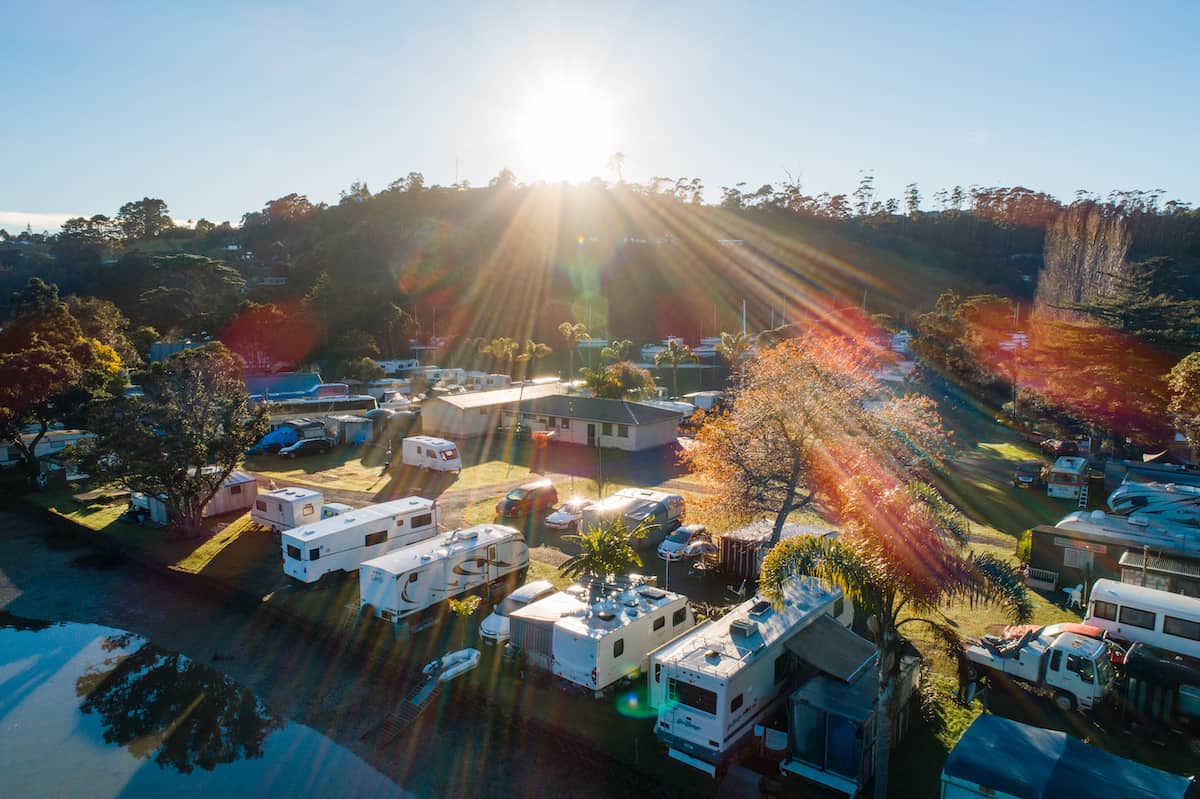
RV Park at sunset

Helpful information about SBA loans for RV Parks, Campgrounds, and Glamping Grounds

By: Tricia Hoffman, Senior Vice President – Business Development Officer at Gulf Coast Small Business Lending

Recreational vehicles, camping, and glamping comprise a unique, carefree lifestyle and an ever growing popular pastime for many Americans.  As a result, there has been considerable growth in the industry in recent years.  If you already own an RV park, campground, or glamping facility or if you are interested in start-up or buying one, this a great time to do so!  As you can imagine, it is not always easy or even ideal for your business to fund acquisitions, start-ups, improvements or expansions out of pocket.  This article provides information regarding SBA financing for these types of projects.

If you are contemplating the purchase (also known as an acquisition), start-up, expansion, or improvement of an RV park, campground, or glamping facility you should definitely consider an SBA loan to finance your project.  I have actively financed projects in this unique industry over the last several years so I thought it might be helpful to share some of the details that most borrowers find useful as they are starting the process of securing financing, specifically an SBA loan. Often when I speak with a prospective borrower, they are surprised to learn that an SBA loan is an excellent option for their financing needs.  Let’s look at why that is the case!

First, SBA loans come with terrific terms for small business owners which makes them very appealing if only for this reason.  SBA loans require less money down and allow for longer repayment terms than conventional commercial loans.  Nearly every borrower will benefit from those two features alone; however, those are not the only benefits!

SBA loans can be used for any or all of the following purposes (and often multiple purposes are combined into one loan!):

  • Purchase land to construct new facilities;
  • Improve existing RV parks, campgrounds, or glamping facilities;
  • Invest in machinery, furniture, technology, or supplies to better accommodate guests/campers;
  • Acquire existing RV parks, campgrounds, or glamping facilities;
  • Refinance business debt;
  • Partner buyouts.

SBA loans for RV parks, campgrounds, and glamping facilities are available nationwide through the SBA 7(a) loan program in amounts up to $5,000,000.  The loan term is determined based on the use of SBA loan proceeds but follows these guidelines: up to 7 years for working capital (this might include closing costs, or other “soft costs” associated with the loan or project), up to 10 years for equipment, and up to 25 years for real estate.  SBA loans are fully amortizing which means that there is no balloon payment, review, or renewal required during the term of the loan.  Your loan will be fully paid off at the end of the loan term (assuming you have made all required monthly payments on schedule). Longer amortization terms can be especially beneficial for small business owners, as they allow the business to spread the cost of their financing package over a longer period of time which, in turn, makes it more affordable.

In most instances, borrowers will be required to invest their own cash resources in an amount equivalent to at least 10% of the total contemplated project costs.  Interest rates are based off of the Prime lending rate and are competitive but will sometimes vary slightly from lender to lender.  Note that all SBA loans require a personal guarantee from the business owner(s), and this is a regulatory requirement that SBA lenders are not able to waive.  

Often a portion of the financing package is provided by the seller in business acquisition transactions and we are accustomed to including this as part of the loan structure – just let us know on the front end if seller financing is an option in your situation.  

Also, I always recommend that you work with an SBA Preferred Lender (like Gulf Coast Small Business Lending) because SBA Preferred Lenders are the most experienced and also have delegated approval authority on behalf of the SBA.  This considerably shortens the timeline to complete the SBA loan process.

Please note that SBA loan programs are not available for mobile home parks or properties where the majority of revenues result from long-term residents.

In order to apply for an SBA loan, you will need to submit complete documentation about your business (or the business you are buying), the business owners, along with an application.  Documentation includes both personal and business tax returns (for 3 years), personal finance statements, business debt schedules, and perhaps other information unique to your situation.  I always recommend that you speak with me first so I can provide customized and detailed guidance. 

At Gulf Coast Small Business Lending we understand that each borrower, business need, and loan request is unique. Our professional team of highly experienced SBA lenders understands the RV park, campground, and glamping industries.  We encourage you to speak with a Gulf Coast Small Business Lending representative to discuss your project as well as any other requirements for your specific situation.

If interested, you can find additional information about many of the industries and loan purposes offered by Gulf Coast Small Business Lending by visiting the SBA Loans section of our website.

Lastly, many other frequently asked questions are addressed on our website here: https://gulfcoastsba.com/faqs/.


About Tricia Hoffman

Tricia Hoffman has been actively involved in SBA lending for over 20 years serving as both a Business Development Officer and Portfolio Manager during her career. Tricia graduated with a degree in Economics and Accounting from the University of Tampa. After graduation, Tricia worked as a commercial real estate loan officer, special assets manager, and private banker in the Tampa Bay area. In 1998 she joined with national SBA lender and began working with small business clients throughout the U.S. Since 1998 Tricia has provided financing for hundreds of borrowers across many industries. When not originating SBA loans you can often find Tricia on the golf course, on the beach, or out for a hike.


Products and services offered by Gulf Coast Small Business Lending, a division of Gulf Coast Bank & Trust Co. Nothing herein shall be construed as a commitment to lend. All loans are subject to credit and collateral approval. Additional terms, restrictions and limitations may apply. Loans are only available to U.S. citizens and residents. Member FDIC – Equal Housing Lender.

USDA – Business & Industry (B&I) Loans

USDA B&I Loan

By: Riley Risto, Senior Vice President – Business Development Officer at Gulf Coast Small Business Lending

While SBA loans continue to be the most popular and well-known option for helping small businesses obtain financing for commercial real estate and equipment purchases, small business acquisitions, and working capital needs; another, lesser-known program exists to assist businesses in rural communities – the USDA B&I Loan.

General information about USDA B&I loans

Under the Rural Development umbrella of the US Department of Agriculture sits a relatively obscure, but effective, means for obtaining financing if you’re looking to expand your business into a designated rural area (see link for eligibility map). You might be surprised at how many areas in the U.S. are designated as “rural” for loan eligibility purposes!  

The USDA authorizes and allocates funds to each state through a network of field offices, for the purpose of encouraging investment in underserved rural communities, by way of loan guarantees.  In a public/private partnership with financial institutions, this program improves the economic health of rural communities by increasing access to business capital through loan guarantees; an ideal way to leverage public funds against private institutional credit standards. The net effect is more money being made available to rural businesses, enhancing the quality of life for those communities and the people that live and work there.  That doesn’t mean that anyone can get approved.  Credit factors to be analyzed include, but are not limited to, character, capacity, capital, collateral, and other conditions.     

You may be wondering if the USDA B&I loan is right for you.

Let me begin by saying that, functionally, this loan option is very similar to an SBA loan with some exceptions, for example:

  • USDA B&I loans are made available to a larger pool of candidates, including non-profits and tribal entities, for the purpose of maintaining or creating jobs.
  • USDA B&I loans must be fully secured against discounted collateral, which means funds being used for goodwill are not eligible.
  • The USDA B&I loan has a max term of 40 years on real estate, whereas SBA loans are limited to 25 years.
  • The field office must give final approval to any B&I loan.  There is no delegated approval authority given to financial institutions.  For this reason, it’s a good idea to pre-screen your project with a USDA field office and a knowledgeable lender.  You can reach me or another experienced Gulf Coast Small Business Lending professional here.
  • USDA B&I loans are currently available to U.S. citizens and permanent residents of the U.S., whereas only U.S. citizens qualify for SBA loans.  This, of course, is subject to change, but for now, the B&I loan program is a source of funding for those running up against a procedural SBA roadblock.  
  • The maximum SBA loan guarantee is $3.75 million.  USDA B&I loans have a much higher maximum, but with increasing approval authority required beyond $5MM.

Here is what you’ll need to get started.  

For a new business you will need a thorough business plan and two years of monthly projections with detailed assumptions.  This can seem like a daunting task, but the more thought and effort you put into this, the better your chances of approval.  Each USDA state field office only has a limited pool of funds allocated to it for each fiscal year, which stretches from October 1st to September 30th.  Once the budget is gone, applicants will need to wait for the next congressional funding authorization and USDA allocation.  If you’re approaching the end of a fiscal year, try to time your application to coincide with the reauthorization, by pre-screening your project as soon as possible.  Having a feasibility study already completed may also be helpful, depending on the scope of the project.

The USDA’s main objective with the limited B&I funding pool is to both save and create rural jobs.  As you think through the elements of your business plan, pay special attention to, and give ample space for explaining how your project will create or save jobs in your rural community.  For an existing business, a detailed business plan is not necessarily required, however, it’s still a good idea to include a letter of explanation addressing how funds will assist in creating or saving rural jobs.  Reach out to us (https://gulfcoastsba.com/our-people/) for a list of other documents needed to get pre-screened.

What is the typical timeline for a USDA loan request?

As with all government guaranteed loan applications, you need to be organized and responsive to lender requests.  The document burden for these loans is such that “only the strong survive,” so be patient and buckle in for the long haul.  Picking the right lending partner to assist is of paramount importance, of course.  Make sure your lender has experience in closing USDA B&I loans and is equipped to help you navigate all the requirements for getting to the finish line.

From a timing perspective, it’s important to understand that most USDA B&I loan projects take 3–6 months, sometimes longer for construction and development projects. Much of this is beyond your control or the lender’s, especially during times of economic shifts when preparing for volatility becomes essential for both borrowers and lenders. The added layer of approval authority, securing the USDA guarantee, and working with third-party vendors in remote rural areas, make these loans just a little more difficult than SBA loans.


About Riley Risto

Riley Risto has been in finance since 1995, commercial lending since 2004.  He graduated from the University of Utah with a BA in 1999 and from BYU in 2006 with an MBA.  He has worked in small community banks, super regionals, and national banks and has a broad understanding of finance, accounting, and economics.  Riley enjoys close personal relationships with his brokers and clients and provides value-added service in every deal that he funds.  Riley lives with his wife, Melanie, and 6 kids in the Wasatch Mountains of Utah and enjoys travel, reading, and a host of outdoor activities.

Financing the acquisition of an accounting firm or a financial advisory practice

Accounting Financial Advisory

There are many accounting firms and financial advisory practices that are owned by Baby Boomers that will transition to new ownership in the next decade. Options include selling to an existing employee, family member, or a third party. Or, a competitor might acquire one of these firms to help expand and grow more quickly while reducing competition.

The sale of accounting practices and financial advisories pose an interesting dilemma for lenders because there is typically little or no “hard” collateral. A buyer is essentially purchasing the cashflow and the “book of business” which includes the goodwill, customer relationships, and intellectual property. Sure, there may be some furniture, fixtures, and equipment – but these are already depreciated to a large degree, and lenders typically discount them even further for collateral valuation purposes. Similarly, accounts receivable might be part of the sale but, once again, they too are discounted. Note that often some or all of the receivables go with the seller so this asset may not even be part of the transaction.

How to finance the acquisition of an existing accounting or advisory business?

There are many options for a buyer to consider. These include using cash, the ROBS program (where an individual can rollover some or all of the IRA or 401k), a home equity line, or the SBA 7a loan program. A buyer could also pursue seller financing for some or all of the purchase price.

Many might wonder why they should not consider a conventional loan program. Realistically, most conventional business lenders will require sufficient collateral to fully secure their conventional loan. For example, if you want to borrow $1,000,000, with a conventional loan, you’ll likely need at least $1,000,000 worth of collateral (real estate, equipment, marketable securities, accounts receivable and inventory).

Because of this, the U.S. Small Business Administration (SBA) 7a loan program provides a great alternative for financing these intangible-heavy transactions. The SBA 7a loan program can provide financing up to $5 million while guaranteeing these loans 75%, sometimes more, which mitigates at least some of the risk, in turn making the bank more comfortable with the deal. This reduction in risk is very important to acquisition financing of an accounting or financial advisory practice, where hard assets and tangible collateral are a typically only a very small part of the purchase price.

An accounting practice, or a financial advisory practice, can be financed with the SBA 7a loan if the business’s trends are stable or positive, if there is adequate cashflow, and if a buyer has good personal credit (typically a FICO over 680), enough liquidity for a down payment, plus some post-closing liquidity or cash reserves. SBA lenders look at all aspects of the loan request during the loan underwriting process to arrive at a decision. If the business is being sold without real estate, the term and amortization of the loan is 10 years. If there is real estate involved in the sale, the term and amortization may go up to as high as 25 years. Notably, SBA 7a loans are fully amortizing with no balloon payments, reset, or call dates.

The SBA 7a guidelines call for a minimum equity injection of 10%, in most cases. You should know that this is 10% of the “total project costs”. Total project costs include the cost of the goodwill, any furniture/fixtures/equipment, receivables plus working capital, closing costs, attorney fees, SBA fees, and business valuation. If there is an existing partner who wants to buyout other partner(s) and (ultimately) own 100%, in some cases that buyer may be eligible for 100% financing if he/she owns 10% or more and the balance sheet meets certain benchmarks. If this is your situation, it is best for you to talk with your SBA lender early in the process for complete details.

With almost all business acquisitions using an SBA loan, a third-party business valuation is required. The bank engages a qualified valuation firm, which reviews the financial statements and cashflow, market conditions, and specifics about that industry. If the business valuation comes in at a value lower than the purchase price, some lenders will require the purchase price to be reduced, perhaps a seller-financed note, and or an increased buyer cash injection to make up the difference between the price and valuation.

Requirements of the Buyer

A buyer could be an individual that forms an entity to acquire the practice, or it could be another accounting or financial advisory practice acquiring to grow their existing business. Ideally the buyer should have a FICO score above 680, 10% cash equity injection plus left over cash reserves, and some related experience. Depending on the state where the practice is and the specifics of the practice, coupled with the requirements for that field, there will be licensing requirements that need to be considered in an ownership transition. Does the buyer have the correct licenses and certifications? Is there an existing employee that could help fulfill these requirements?

A buyer should also consider what consulting, if any, a seller might provide during the transition. How will the buyer connect with the existing client base? Will the seller make introductions? How will relationships be maintained? Is the seller’s philosophy sufficiently compatible with the buyer’s?

A lender will also look at the buyer’s personal financial obligations (mortgage, car payments, credit card debt, etc.) and then consider what, if any income will continue after the business acquisition (spouse’s income, rental income, etc.). The SBA lender then will need to subtract an appropriate salary out of the business cashflow for the buyer.

With an SBA 7a loan, the lender will place a first lien position on all of the business assets. Buyers need to also know that, in most cases, unless the loan is fully collateralized with business assets, a lender may also place a subordinate lien on a buyer’s personal real estate. This means that if there is a first mortgage on the residence, for instance, the SBA lender will put a subordinate, or second position lien on the residence as well. This doesn’t mean that the loan must be fully collateralized or that additional tangible collateral must exist, it just means that the SBA mandates that the lender secure liens against the buyer’s additional collateral, if it exists.

As mentioned above, in many instances, a seller will provide some amount of seller financing, or a seller note. Typically, most seller notes are for 10% to 30% of the purchase price. This can help provide comfort to the buyer and the lender related to performance of the business going forward and minimizing risks. There are different terms for seller notes; some may have P&I payments from day 1, others may be on ‘hold’ or on ‘standby’ for a number of years, or possibly for the term of the SBA loan. Seller notes are always subordinate to the SBA loan.

It is possible, under certain circumstances, that if the cashflow supports it, a buyer can put down as little as 5% cash equity injection if there is a seller note of at least 5% on full standby. Full standby means, in these situations, that while interest accrues, no P&I payments are permitted.

Requirements of the Seller

To begin a review of the seller’s business for a possible SBA 7a loan, the SBA lender will need three years of business tax returns, interim financial statements (profit and loss and balance sheet), and a debt schedule, among other things. Please speak with your SBA lender for a comprehensive list that is specific to your business.

It also helps for the lender to clearly understand what the seller’s roles and responsibilities have been, what employees are staying in place, and what their roles and responsibilities are, what the client base and book of business consists of, the demographics, nature of revenues, recurring revenue details, and the like.

SBA lenders

Each SBA lender has its own unique process so it is important for you to find one that fits well with your needs. For example, some SBA lenders (like Gulf Coast Small Business Lending) are direct, Nationwide SBA Preferred Lenders. This is meaningful to borrowers because SBA Preferred Lenders (often referred to as “PLP” for preferred lenders program) that have earned this status have been granted delegated authority to underwrite, process, and close SBA-guaranteed loans on behalf of the SBA.  This means that SBA Preferred Lenders like Gulf Coast Small Business Lending are dedicated to serving small businesses and are recognized as specialists in SBA lending. As a result, our borrowers benefit from a much quicker overall process.  Working with Gulf Coast Small Business Lending on your SBA transaction will be (approximately) 3-4 weeks faster than if you worked with a non-PLP lender.

Some SBA lenders are active nationwide, while some have geographic limitations. In addition, some SBA lenders have financed may acquisitions of accounting firms and financial advisory businesses and that experience can be very helpful in the overall process.

In summary, an SBA loan just might be the ideal solution when you are considering the purchase of an accounting or financial advisory firm. If you have questions, I am always happy to talk with prospective borrowers.  In addition, you can find considerable information about many of the industries and loan purposes offered by Gulf Coast Small Business Lending by visiting the SBA Loans section of our website.


About Jim Frey

Jim Frey has over 21 years of financial services experience, including an exclusive focus on SBA lending since 2012. Jim enjoys working with many referral sources across the US and he takes particular satisfaction in helping business owners reach their goals through SBA financing. Over the years, Jim has developed a specific expertise in structuring SBA loans for business acquisitions, franchise lending, expansions and construction. Jim has a Master of Business Administration from the University of Pittsburgh’s Katz Graduate School of Business and a B.S. in Finance from St. Vincent College. When not working on deals, Jim’s hobbies include hiking, volunteering, golfing, and traveling with his wife and two daughters.


Products and services offered by Gulf Coast Small Business Lending, a division of Gulf Coast Bank & Trust Co. Nothing herein shall be construed as a commitment to lend. All loans are subject to credit and collateral approval. Additional terms, restrictions and limitations may apply. Loans are only available to U.S. citizens and residents. Member FDIC – Equal Housing Lender.

SBA Loans for Franchise Businesses

Franchise SBA Loans

SBA loans are an excellent option for single unit and start-up franchise operators

By: Mike Pierson, Executive Vice President – National Sales Manager at Gulf Coast Small Business Lending 

The Small Business Administration (SBA) has been a staple for decades in assisting borrowers as they obtain financing for start-up franchise businesses, expansion of multi-unit franchise operators, and acquisition of franchise businesses.  The SBA allows lenders to extend credit to borrowers that are otherwise unable to obtain financing elsewhere by providing a guarantee to the lender in case of loss due to loan default which, in turn, makes lenders more likely to offer financing for SBA eligible projects.  This article will provide some useful information if you are considering utilizing an SBA loan to finance your franchise business.  For the purposes of this article, an “SBA loan” refers to a loan provided using the SBA 7(a) loan program.

For over 20 years, I’ve had the honor of providing financing for over 200 franchisees in an array of franchise concepts across many different industries.  

The SBA loan product offers several benefits to franchisees, including:

  • Longer repayment terms than typically available with conventional loans – up to 10 years.  Note that SBA loans are fully amortizing which means there will be no balloon payment due in 5 years;
  • Flexible uses of SBA loan proceeds covering a variety of project costs;
  • SBA loan amounts up to $5,000,000;
  • Low down payments (this refers to the borrower’s required injection of personal funds);
  • Opportunity to provide operating capital for the franchise business;
  • Affordable and competitive interest rates based off of the Prime lending rate;
  • Attractive terms that allow borrowers to retain much of their personal liquidity. 

In my experience, I have found that the primary key to success in securing an SBA loan to finance your franchise business is working with an experienced SBA lender.  I always recommend that prospective borrowers interview SBA lenders and ask these key questions (also, check out an article written by our top producing business development officer about How to Choose the Right SBA Lender for Your Project for additional tips):

  1. How long have you been an active and exclusive SBA lender?
  2. How long has your bank been providing SBA Loans?
  3. How long have you been a loan officer of your bank?
  4. Is your bank a Preferred Lending Partner of the SBA?
  5. If you plan to open multiple locations, be certain to ask the lender how quickly they will be willing to finance a second location. 

The SBA sets guidelines for all participating lenders and for this reason, most lenders will require a 20% cash injection (also known as “down payment”, funded from your personal cash reserves) for the first franchise location.  Many lenders will require less injection for the second and third locations.  Prudent lenders will also want the borrower to maintain post-closing liquidity after the injection so that they aren’t immediately “strapped for cash” as soon as they’ve closed on their SBA loan.  Understandably, not having cash reserves to meet personal living expenses would be an added stress that would pile onto the pressure of opening (or buying) your franchise business.  

For a successful application, it’s important that borrowers have prepared a thorough Business Plan and Two Year Pro Forma financial projections, including month-to-month for the first year with detailed assumptions explaining how they arrived at the figures in the projections.  Borrowers should not rely on the franchisor’s numbers when creating projections.  Instead, they should conduct their own research and confirm that they thoroughly understand all the details of the financial undertaking they are considering.   I always recommend that they interview other franchisees in similar markets to get an accurate reflection of the operation of the franchise business.  You might be surprised at what you learn!

It is also very important to have a location selected for your franchise business prior to applying for your SBA loan.  The more information that the borrower provides to the lender (including demographics, traffic patterns, competition, and surrounding businesses), the quicker the underwriting process will be!  Once you have selected a location, it is recommended that you NOT execute a lease until you negotiate the SBA’s required landlord waiver (don’t worry, your SBA lender should explain this to you).  The next step after securing your location is to begin gathering construction estimates, furniture and equipment quotes, and inventory needs.  You will need all of this information when you prepare your financial projections and, obviously, these figures will ultimately determine the amount of SBA loan you will need.

One other tip is that it is always helpful when a borrower details the reasoning behind their selection of a specific franchise.  Whether that’s because of brand recognition, regional exposure, or personnel experience it helps us to better understand the “big picture”.  Not to mention, the more a borrower can opine about the franchise they have selected the more comfortable an SBA lender will become with the project and contemplated SBA loan.

You should also know that SBA lenders always analyze the franchise as well as the borrower when considering your SBA loan request.  Our review will include such items as: the number of franchise units, the system wide failure rate, the financial health of the franchisor, the regional/national footprint of the franchisor, and the name recognition of the brand.  In addition, we will review the borrower’s management experience, personal credit management, financial strengths, and outside income.

SBA lenders like Gulf Coast Small Business Lending support borrowers throughout the entire SBA loan process, including application, underwriting, loan closing, construction, pre-opening, and post-opening of the business.  We have worked with over 70 different franchise concepts and are always looking to expand into new systems with successful operations. If you have questions or simply wish to discuss the possibility of financing your franchise business, I (and my experienced sales team) am always available to speak with prospective franchisors and franchisees.  After all, SBA lending is our focus, and we love helping small business owners achieve their entrepreneurial dreams!

You can also find more information about our loans for franchise businesses and restaurants (both franchise and independent) here: https://gulfcoastsba.com/sba-loans/ and https://gulfcoastsba.com/restaurant-franchise/


About Mike Pierson 

Mike Pierson has been an SBA lender for over 25 years, joining the Gulf Coast Small Business Lending team in 2014. In 2019, Mike was promoted to the role of Regional Sales Manager and in 2022 he was named Executive Vice President – National Sales Manager. As a producing sales manager, Mike enjoys working with his BDO team, borrowers, and referral sources nationwide and has specific expertise in structuring SBA loans for business acquisitions, franchise lending, and construction. Mike holds a Master’s Degree in Sports Management and Bachelor’s Degrees in Finance and Marketing from Florida State University. He is an active participant in youth sports, coaching both soccer and basketball. Mike is also an avid golfer and enjoys fishing with his family.


Products and services offered by Gulf Coast Small Business Lending, a division of Gulf Coast Bank & Trust Co. Nothing herein shall be construed as a commitment to lend. All loans are subject to credit and collateral approval. Additional terms, restrictions and limitations may apply. Loans are only available to U.S. citizens and residents. Member FDIC – Equal Housing Lender.