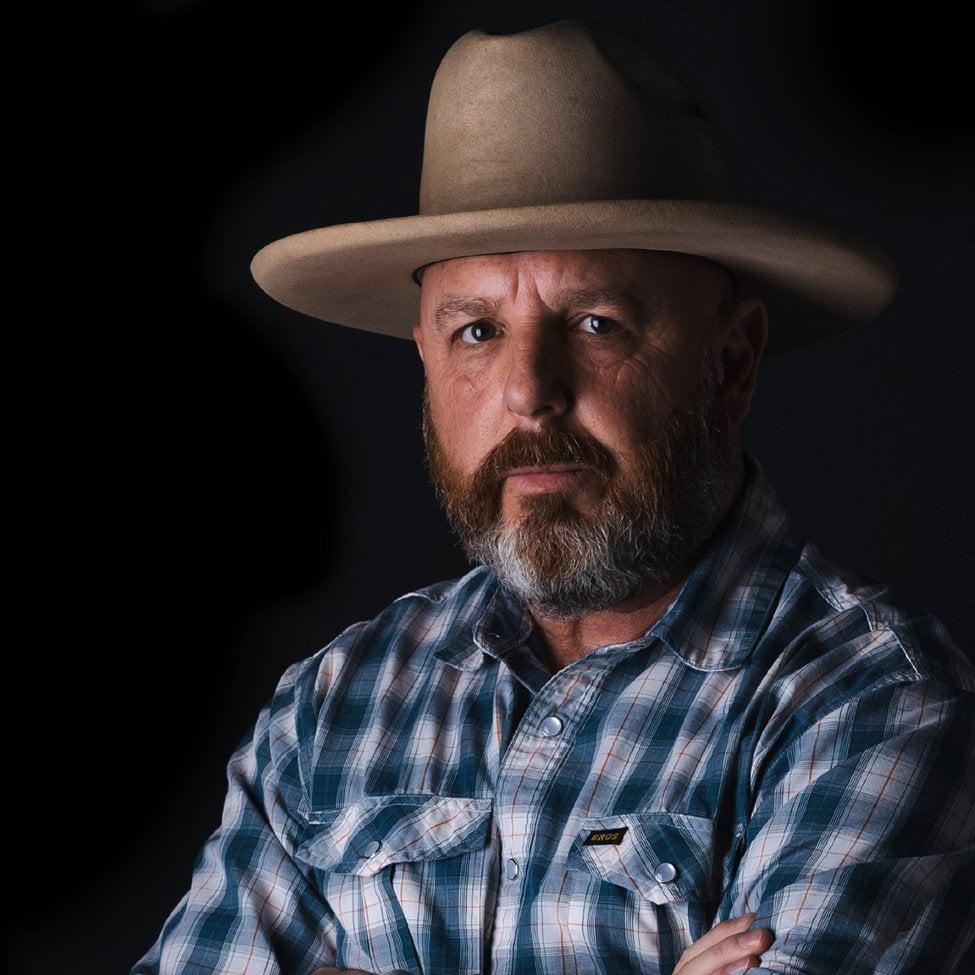
Meet Nimi Natan
He’s President & CEO of Gulf Coast Small Business Lending. While Nimi may not be your run of the mill, suit & tie banker, he loves SBA lending and especially enjoys working directly with our borrowers. Our affinity for complicated and unusual deals starts at the top and permeates our culture.
Under Nimi’s leadership we deliver SBA & USDA loans across the country, to business owners of all types, in a wide variety of industries, who are as committed to their families, businesses, and communities as we are to ours. We work closely with our borrowers and referral sources to understand their needs and tailor solutions.
We aren’t your everyday, ordinary SBA and USDA lenders.
How to Get an SBA Loan to Buy an Existing Business: A Checklist
A buyer called me last month right after signing a letter of intent on a company he’d been chasing for almost a year. He was excited, and understandably so. But he also had no real idea what came next. He knew he needed financing, and he knew the phrase “SBA loan”, but the actual sequence of events between that initial promise of a deal and the closing day was a complete mystery to him.
I’ve spent my entire career looking at the math behind how companies start and grow and over the last few years I’ve noticed the concept of “acquisition entrepreneurship” has taken an unusual upwards trajectory. People are waking up to the fact that buying a profitable, running machine is often a much smarter financial move than enduring the grueling grind of a startup.
On the surface, it sounds like a straightforward paperwork exercise. You find a profitable company, agree on a price, and take the contract to a bank. But in reality, successfully securing the capital is much more than that, and it can become an exhausting endeavor if you’re not aware of the process.
After doing this for decades, I can tell you it boils down to five things. Bankers call these the “Five Cs of Credit”, and honestly, they still hold up perfectly for acquisition financing.
Character: Are You Someone Whom We Can Trust With This
When you apply for an SBA loan to buy an existing business, we’re looking at your personal credit history, your track record with past obligations, and frankly, how straightforward you are during the process. Buyers who hide problems instead of explaining them upfront make us nervous, and for good reason.
“I’d rather hear about a bankruptcy from ten years ago directly from you than find it buried in a credit report,” I tell people often. “How you handle hard conversations tells me a lot about how you’ll run the business.”
Borrowing Capacity: Can The Business Actually Support This Debt
This is the heart of the whole process. Capacity means cash flow, specifically, whether the business’s historical earnings (as well as capital expenditures and growth in working capital) can comfortably cover your new loan payment and still leave room for you to operate and pay yourself.
We analyze three years of tax returns, subtract known capital expenditures, growth in inventory purchases and accounts receivables, and calculate a debt service coverage ratio. If the business generates just barely enough to cover the payment with nothing left over that’s a red flag. An SBA business acquisition loan needs breathing room built in, because real businesses have slow months and unexpected expenses.
Capital: What Are You Actually Putting In
One big thing lenders want to see is that you’re bringing in personal cash equity to the deal, even if you are asking for a government-guaranteed loan (like an SBA 7a loan). Don’t get me wrong, this isn’t about us doubting you. It’s about making sure you, the owner, is personally invested in the business you’re buying.
“When you’ve got your own skin in the game, that’s when you make difficult decisions that you may not make otherwise,” I say to almost every buyer I meet. It’s just human nature.
Collateral: What Backs the Loan If Things Go Wrong
This one’s a given while talking about any loan, but this is where SBA financing to buy a business differs from a conventional bank loan. Traditional lenders often want the purchase to be secured heavily by hard assets, real estate, equipment, or inventory. But with SBA loans you get the choice of borrowing against the business itself, its cash flow, its customer relationships, and its goodwill, rather than requiring a warehouse full of collateral.
This flexibility is an option specifically because of the guarantee lenders receive from the federal government; and this is exactly why acquisition entrepreneurs gravitate toward this type of financing. You don’t need to be buying a business with hard assets to secure funding.
Conditions: Does the Deal Structure Make Sense
The last piece is the deal itself. What’s the purchase price relative to what the business earns? Is the seller staying involved for a transition period? Is there a seller note being carried to bridge any gap between price, cash injection and available bank debt?
“You can be a great buyer, but if your deal is poorly structured deal, you may not get approved,” I remind people. “The structure has to hold up on its own.”
Bringing It All Together
If you want to know how to get an SBA loan to buy a business, understand that we’re really just evaluating you against these five things: your character, your capacity to service the debt, the capital you’re bringing, what backs the loan, and whether the overall deal makes sense. Strengthen any weak spots before you apply, and the process moves a lot faster and has a greater likelihood of approval.
At Gulf Coast Small Business Lending, this is the lens we use on every acquisition deal that comes across our desk. If you’re thinking about buying a business and want an honest read on where you stand against these five factors, let’s talk. You can connect with our team of experienced SBA professionals here: https://gulfcoastsba.com/our-people/.
It Takes a Village
Small and medium-sized businesses (SMBs) represent the engine of the US economy, driving innovation, creating jobs, and powering local communities. Yet, when it comes to securing the capital needed to grow, SMB owners often run into a familiar wall: long application processes, rigid credit requirements, and weeks of waiting for a decision.
In recent years, the story was framed as a battle: Traditional Banks vs. Disruptive Fintechs. If you listen to the hype, the future of business lending belongs entirely to algorithms. Write a quick prompt, plug in a bank feed, and let an automated credit model decide the fate of your small business in seconds.
Not so fast. Fintechs, regretfully, are almost always associated with extraordinary interest rates and fees and in some cases, outright scammy business practices.
Today, a smarter narrative is taking shape. Rather than competing for market share, we, traditional banks, and fintech innovators are joining forces to solve the SMB capital crunch.
When we ourselves looked at fintech, and specifically automated underwriting, we saw plenty of cracks – impersonal decisions, failure to understand nuanced business models, and risk pricing that leads to eye-watering interest rates. On the flip side, we aren’t innocent either; our manual processes and paper-heavy workflows can sometimes make getting a simple term loan or a line of credit feel like moving mountains.
The solution to the SMB capital crunch isn’t replacing human bankers with bots. It’s melding the digital efficiency of fintech with the sound risk management and low-cost capital of traditional institutions.
To bridge the gap, we have to be honest about where both models fall short:
Pure Fintech Lenders: They got the speed right, but often at the expense of the borrower. Relying heavily on algorithmic risk scoring forces alternative lenders to price in uncertainty. The result? APRs that can drain an SMB’s cash flow rather than grow it.
Traditional Banks: We have the lowest cost of capital and deep community roots, but our front-end customer experience can be slow. Asking an entrepreneur to gather three years of tax returns, print PDF bank statements, and wait four weeks for a decision simply doesn’t work for modern business timelines.
Melding these two worlds isn’t about letting a computer make the final credit call. It’s about leveraging technology to clear out administrative friction so human underwriters can make better, faster decisions. Here is a summary of what we are working on:
- Frictionless Data Gathering: Fintech tools excel at API integration. Instead of making borrowers hunt down paperwork, technology can instantly aggregate accounting data, tax history, and bank statements in minutes.
- Speeding Up the Desk, Not Replacing the Underwriter: Once the data is ingested, financial technology packages it cleanly for human review. A banker can review real-time cash flow and context within hours—not weeks.
- Affordable Rates and Low Fees with Modern Speed: Because we retain control over risk parameters and use our low-cost deposit base to fund loans, SMBs get reasonable bank interest rates without the agonizing bank wait times.
The Bottom Line: Small business owners don’t want a machine deciding if their life’s work is creditworthy. But they also can’t afford to wait months while opportunities pass them by. By adopting technology and streamline our human processes, rather than an underwriting decision-maker, we keep the relationship at the center of commercial lending here at Gulf Coast Small Business Lending while giving business owners the fast, transparent access to capital you actually need.
The title of this post isn’t original. I am going to be sitting on a panel with the same name in December, FTT’s Fintech Conference in Austin. See you there.
If you run a small business or work in commercial lending, where do you feel the biggest friction exists today—the speed of the process or the relationship itself? Let’s discuss in the comments. And as always, if you need capital, give us a shout.
Contact information for our team is here: https://gulfcoastsba.com/our-people/
A New Era at the Fed
My old econ professor, Jeremy Siegal is a known “Fed Watcher.” I quickly formed an opinion on Kevin Warsh after watching the new Federal Reserve Chairman’s debut FOMC meeting in June and waited a couple of days before listening to Siegal’s analysis; our views are identical.
Spoiler alert: I am very happy about Warsh and believe he is the right person to guide our increasingly complex economy. He had me with the first six words he uttered: “The Committee will deliver price stability.”
The meeting enforced the feeling of a fresh start at the central bank. Taking the wheel at the Fed is one of the toughest jobs in the world, especially succeeding Jerome Powell (I am a fan, btw). Warsh’s highly anticipated first public meeting in June proved he is exactly the steady, forward-thinking leader the economy needs right now.
First, the tone: His communication style during the post-FOMC meeting press conference is direct and concise. I contrast it with the typical ultra-cryptic “Fed-speak.” Warsh came across as clear, decisive, and market-savvy.
Second, the action: While it is still early to judge, I very much liked his balance of handling inflation concerns while signaling a pragmatic, pro-growth approach to interest rates. Warsh’s background, having been the youngest Fed Governor during the 2008 financial crisis, gives him the unique, practical market experience required for this moment.
Navigating the Waves
Warsh is facing a challenge not seen since the early days of Paul Volcker’s tenure at the Fed, perhaps even more unusual: Powell keeping a seat on the board, political pressures, the ascendance of China, and very stubborn inflation numbers. I am confident that his decisive debut actions quieted the skeptics and showed he can maintain the Fed’s critical institutional independence while still prioritizing economic stability. Warsh’s first outing was a major win for both Wall Street and Main Street, the two constituents that are most important to our borrowers and our business.
If you haven’t watched June’s FOMC presentation, view it here: https://www.youtube.com/watch?v=7pIFqmMCxVc. This broadcast captures the exact tone and public actions that are defining the start of his tenure.
The Impact on our World
Stability is the key economic underpinning to our business. Above all, when we look at new lending opportunities, we judge the quality and stability of the business’ free cash flow. Full employment, price stability, and lower interest rates are the three macro-economic factors that figure heavily into every loan we underwrite. And the new leadership at the central bank are laser-focused on these three factors.
As always, please consider Gulf Coast Small Business Lending when you start thinking about how to grow or acquire a business. We are on standby to listen to your plans and hopefully help you finance your dream. You can find a listing of our experienced business development officers along with their contact information on our website here: https://gulfcoastsba.com/our-people/. We are actively supporting entrepreneurs nationwide as SBA Preferred Lenders.
Dear AI:
I hope this letter finds you well.
We need to talk. It looks like you are planning to stick around, and I would like to provide a list of wishes that are necessary for us to get along, even thrive together.
As a lender, specifically an SBA lender, I’d like you to:
Help potential borrowers and referral sources find us. There are over 4,000 of us, each with our own quirks, likes and dislikes, underwriting standards, regulatory regimes, specializations, loan terms, and a hundred more unique features. The same with borrowers: each is an individual with her or his needs, experience and financial wherewithal. The name of the game is “capital access.” We have capital we wish to invest, and the business owner has uses for capital. It’s as simple as learning about us (lender and borrower) and matching us up.
Improve our productivity. Doing SBA loans is hard work and some of it is tedious and prone to errors. We can’t hire and train fast enough to keep up with the demand and are hopeful that you can help us. We are already using you for this and looking for added innovation to make it even better.
Give me insight. The data is there, lots of it, but it’s sometimes difficult to separate signal from noise and distill it to important trends and insights. What part of the country has the most need for our capital? Industries? What makes a good SBA loan? A bad loan? What industries are deserving but underserved. To be clear, I will never ask you to make decisions for me, but I’d love you to give me insights that allow me to make the right decisions. You’re supposed to be good at it, certainly fast, so let’s get to work.
Earn my trust. Let’s be honest; I don’t trust you very much. I question your answers, especially when you tell me how smart I am (I am not, and I am self-aware). And those hallucinations?!? C’mon, get your act together. And are you sure the proprietary data I input isn’t used for model training or even worse, shared with others?
Don’t be an asshole. Scams, fake news, water and energy consumption, noisy data-centers, opaque pricing, enabling bad actors, intellectual property theft, the list goes on. You’re important, you’re useful (not the Tik Tok part); now let’s work on your ethics.
This is a fairly comprehensive list and I understand it might take a little bit of time to implement every single suggestion. In the meantime, I and my team of experienced SBA 7(a) lending professionals remain available to talk about deals. In fact, that will never change. You can’t get rid of the human element although you can certainly enhance the overall process. Anyone reading this who needs or wishes to interact with a live human, you can find a listing of our experienced SBA professionals here: https://gulfcoastsba.com/our-people/. We look forward to being of assistance.
Foremost, Reliability
I was working on another blog post one recent Saturday morning, writing about the food industry, farm-to-table, how much I love it and how much I’d like to make more SBA loans to its participants. But then a good friend called for some advice on buying a camera. Those of you who know me know how passionate (and opinionated) I am about the craft. I’ve been shooting seriously for a long time, ever since my parents gave me my first good camera (details at the end of this essay, for you fellow photographers). Because of this conversation, my original blog concept has been bumped to June so watch for it in a few weeks.
After I dispensed the advice (Nikon Z6iii), I spent another hour or two writing down all the cameras I owned since that first one, those I loved and those I hated, and tried to find the common thread. It wasn’t the quality of the images I made, the cost, the features or the prestige. It came down to one attribute: reliability. It had to work in all conditions, take abuse, and never fail.
Later that day, after reflecting on it further, I realized that reliability is a core factor in how I evaluate things in both my personal and professional life. That led me to the topic of this blog: what does it mean to be a reliable lender? Here are the qualities I identified. I recommend using this checklist when evaluating your next loan.
- Financial Stability: This is the absolute baseline. A reliable lender must be a safe fortress. I am seeing way too many cases where banks over-extend themselves when issuing term-sheets, only to back out of the deals when it’s time to fund the loans or changing the terms in the last minute (e.g. require higher equity injection, raising rates, etc.) because of their own financial condition.
- Regulatory Credibility: As critical as financial stability is the lender’s standing with the regulatory bodies. To protect the public in general and borrowers in particular, bank-owned SBA lenders like Gulf Coast Small Business Lending are regulated by multiple bodies: state bank regulators, FDIC, and the US SBA itself. We run the cleanest shop in the business, and we urge borrowers to scrutinize their potential funding sources. Avoid non-regulated lenders.
- Absolute Transparency: The best lenders don’t rely on fine print or confusing jargon to make a living. Our loan terms are written in plain English and include all costs, rates, fees and conditions to closing, and when we issue a term sheet, we stick to it. No bait and switch.
- Ethical Underpinning: Believe it or not, there are “bad actors” in our industry. We strive to price our loans fairly and structure them responsibly. We partner with borrowers for many years, as many as 25 in some instances, and mutual trust is paramount. We take this seriously and, as a result, provide full transparency upfront. In short, we do what we say we will do. Finding a way to say YES isn’t just a tagline, it is a way of life and our approach to every opportunity. If there is a way to say YES, we’ll do it.
- Operational Excellence: From the very first contact all the way to loan servicing and final payoff, a lender must have streamlined processes and up-to-date technology. Core to our operating philosophy are well-trained, experienced industry professionals who make every phase of the relationship fast and efficient.
Considering a loan? Give us a try by contacting any of our SBA lending professionals (or me) to get the ball rolling. You’ll find a listing of them here: https://gulfcoastsba.com/our-people/. We are finding a way to say YES!
Back to photography. My first serious camera, a Bar Mitzva gift from my parents was a Canon FTb. I used it for about ten years and while I don’t shoot film anymore, the camera, nearly fifty years old, is as good as new. Subsequently, I owned other stellar cameras such as the Nikon FM2, Nikon F5, Nikon D4 and for the past four years, Nikon Z9. Reach out for camera advice…
Beyond the Term Loan: the Importance of Liquidity and the Tools Available to Support It
As a major, nationwide SBA 7(a) lender, we espouse the program’s power and flexibility. But let’s face it; it’s a great loan to acquire a business, a building, or a machine, but a little clunky for the day-to-day needs of a business, especially one that’s growing.
I’d like to use my monthly blog space to talk about the features of a term loan, focusing on the SBA 7(a) loan program, what it’s good for, and where it falls short, then transition to three other types of financing that can complement it.
A term loan is a type of loan that provides a borrower with a lump sum of cash up front, which is then repaid over a set period of time (the “term”) through a fixed or floating interest rate and a specific schedule of payments. Think of it as a standard mortgage or a car loan but often used by businesses to finance major investments like equipment and real estate. The SBA 7(a) is a term loan, typically repaid over a ten- or twenty-five-year term with monthly payments covering both interest and principal. The advantages of an 7(a) loan when compared to conventional term loan is higher advance rates (so, lower down payment), longer repayment terms (also called “amortization period”), and (from lenders like us), the reliance on cash flow rather than collateral, making it the perfect loan to acquire a business.
However, the needs of a business rarely stop with major investments. In fact, the success of a business is as dependent on how it manages cash flow than it is on the more significant capital outlays. Here is an example: a distribution business receives a major order from a retailer and needs cash to buy inventory. And another: a staffing business lands a lucrative contract with a reputable client, but with 90-day payment terms. It pays its employees every two weeks, generating a significant shortfall in cash.
To address these needs, three forms of loans come to mind. In no particular order:
A revolving line of credit (a “revolver”) is a flexible financing arrangement that allows the business owner to borrow money, repay it, and borrow it again up to a pre-approved limit. Unlike a term loan (where you get one lump sum and the deal is done once it’s paid), a revolving line stays open as long as you are in good standing and may be renewed periodically. Most revolvers are based on a borrowing-base formula, for example 80% of account receivables and 60% of inventory, but some, like the ones we issue, are unsecured and don’t require a borrowing-base; very similar to a credit card.
Factoring (also known as accounts receivable factoring) is a financial transaction where a business sells its unpaid invoices to a third party (called a factor) at a discount in exchange for immediate cash. Instead of waiting 30, 60, or 90 days for customers to pay their bills, the business gets most of the money right away to use for its daily operations. Factoring is an important financial instrument in many industries such as distribution, staffing, and transportation. As an FYI, Gulf Coast Small Business Lending has a sister company that provides factoring.
Finally, the more exotic purchase-order or trade finance. Use case: a distributor receives a large order from a retailer and must import a container of goods from overseas. The manufacturer requires payment before loading the container. The revolver isn’t applicable because in general lenders don’t advance against inventory while it’s being transported. It also doesn’t qualify to be factored because an invoice is not issued until the ultimate customer takes possession, which can be weeks after the order has been placed. Enter purchase-order finance. A handful of lenders advance the full amount of the purchase order to bridge the need until it converts to an invoice. When the goods clear customs and ship to the customer, the advance is either termed (paid off) or converts to a more traditional factor. Again, Gulf Coast Small Business Lending has a sister company that provides trade finance.
To summarize, it takes more than a term loan to run a business, especially one that’s on a steep growth curve. There are several borrowing options to finance the working-capital needs of a business. If you or your clients have a need, our team (and our sister companies) would be happy to assist. Reach out to one of our experienced team of SBA professionals today. You can find their contact information here: https://gulfcoastsba.com/our-people/.
Built to Last: What Makes a Loan Withstand the Economic Cycle?
As a follow up to my February 2026 blog post (https://gulfcoastsba.com/the-gilded-cage-the-perils-of-private-credit-for-small-businesses/), which featured an in-depth discussion of the characteristics of a “bad loan,” I would now like to talk about what makes a loan “good.” Or, more specifically, what makes a loan resilient to economic reality?
Let’s start by describing what “economic reality” really is.
- First, the immutable economic cycle. While a healthy economy is on a positive growth trajectory, it is not a straight line, but rather a wavy one with expansions and contractions, peaks and troughs. Since the ‘70s, the length of the typical cycle has been 8 years (trough to trough), well within the life of a typical term loan.
- Second, within the general cycle which affects us all, there are always pockets (e.g., industries, geographies, etc.) that defy the general cycle to some degree. For example, fast-food restaurants are largely resilient to recessions.
- Third, the dreaded “I-word.” Inflation is a fact of economic life, a side effect of growth and fiscal and monetary policies. Prolonged inflationary periods (a year or more of 3.5% or more, in my book) are among the most destructive forces societies face.
- Fourth, interest rates move up and down, affecting everything from the cost of a mortgage to the interest we earn on our saving accounts.
- And fifth, technological advances. While critical to productivity gains and economic prosperity, technological advances also create “winners” and “losers.” For example, the advent of digital photography put companies such as Polaroid, a former employer of mine, out of business.
There are other important factors, but I think this is a good place to start.
So, what’s a “resilient loan?” Resilient loans put both the borrower and the lender on the same side of the table: lending is NOT a zero-sum activity; both borrower and lender benefit from a good loan and are hurt by a bad loan.
There are four major components that come together to create a resilient loan: the underlying business, the loan itself, the business owner and the lender. I will skip discussing the underlying business and its owner for this write-up and come back to them in a future blog.
The Loan
Two quick disclaimers. First, I am only going to discuss loans to small and medium size businesses (SMBs) and loans ranging from $500,000 to say $12-15 million. In other words, our world. Second, my predisposition as a conservative lender will show.
- Fixed vs. variable rate: Contrary to common belief, a fixed rate is not safer. Sure, if you locked a rate at 2% you are a genius, but the reality is, we don’t know how high and how low a rate will change over the life of a loan. Increasing rates in a moderate-inflation world are typically the result of economic prosperity, and while your loan payment goes up, so should your revenue and profitability. Certainly, in a decreasing rate environment (i.e., now), you don’t want to be locked into a high-interest loan with expensive switching costs. If your ability to service debt changes from yes to no with a 2% rate change, you are borrowing too much.
- Amortizing vs. balloon: For the benefit of both borrower and lender, an amortizing loan is safer. The loan payment is higher, but there isn’t the cliff of refinancing to worry about. Does anyone know what the prevailing interest rates will be in five years? Seven years?
- Longest amortization possible: The benefit to the borrower is obvious; lower monthly payments which gives the business more free cash flow to reinvest. But it also provides better debt-coverage ratio which allows the banker to sleep at night.
- Moderate loan-to-value (LTV) ratio: We often compete on the basis of how much we can lend on any specific project and occasionally lose to lenders who advance more than we are comfortable providing. From experience spanning decades of lending and investing and closing thousands of loans, the high LTV loans are more likely to experience stress and failure for a host of reasons and to the detriment of both borrower and lender. What’s moderate: it depends, and largely driven by the debt-coverage ratio, not necessarily by how much equity was initially invested.
The Lender
One disclaimer; I am a lender.
- Smarts: If a lender is too lazy or dumb (yes, there are dumb lenders) and doesn’t take the time to understand the cash-generating abilities of your company, watch out. They aren’t looking out for you or themselves, just the quick fix that comes from booking a loan.
- Stability: An unstable lender is a careless lender, driven by the need to close loans, not necessarily closing good loans. You are married to that lender for the duration of the loan; do the research.
- Dedicated SMB lending team: Entrepreneur-led small and medium businesses have unique needs which must be understood by the lending team. That team will not only fund the loan, it will also be there with the borrower in tough times. Banks are mostly interested in deposit relationships; find one that’s foremost interested in lending.
- Regulated: I covered the topic of unregulated loans in last month’s blog which you can find here (https://gulfcoastsba.com/the-gilded-cage-the-perils-of-private-credit-for-small-businesses/). The takeaway should be to avoid unregulated loans/lenders.
In summary, a resilient loan combines a strong borrower, a robust loan structure, and an experienced lending institution dedicated to small business lending.
If you are looking for debt capital and would like to discuss how we stack up against these criteria, give our experienced team of professionals a call. You’ll find their full contact information here: https://gulfcoastsba.com/our-people/.